
If you've read our recent blog on the Competitive Flexible Procedure (CFP), (the biggest change introduced by the Procurement Act 2023) you'll remember us flagging something important. We said that under the CFP, "the rules of the game are written fresh each time" and that SMEs need to read each tender notice carefully because missing something could mean “discovering you were knocked out of a competition at roughly the same time you were getting excited about entering it".
One of the key things we were referring to there is downselection and it's something every SME pursuing public sector contracts needs to fully understand before they submit a single word of a bid.
What Exactly Is Downselection?
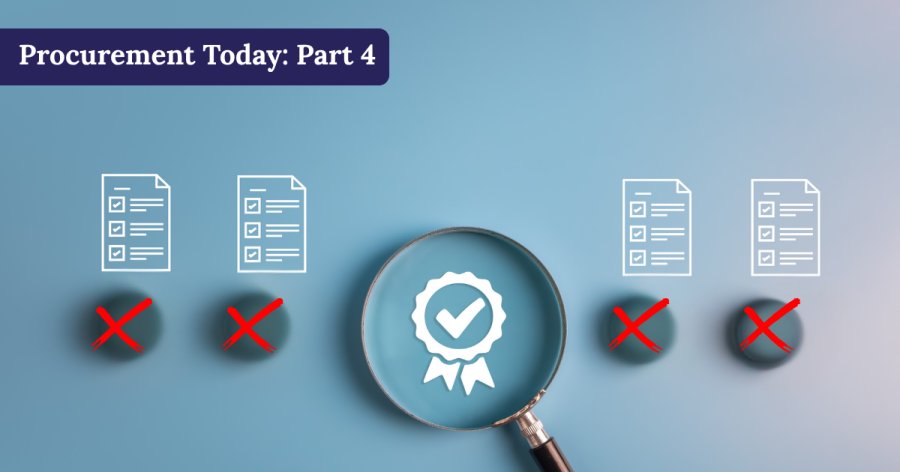
In simple terms, a downselection point is a cut. It is the stage in the procurement process where the contracting authority trims the field and decides which suppliers get to carry on. Think of it a bit like a TV talent show: plenty turn up full of confidence, but only a handful make it through to the next round. At that moment, the buyer is effectively sitting there like Simon Cowell, deciding who stays, who goes and whose bid is about to hear the procurement equivalent of “it’s a no from me.”
In procurement terms, imagine 20 suppliers submit a response. At the first downselection point, the authority scores them against the published criteria and only the top 8 progress. At the next stage, that may narrow to 4, and so on, until only the strongest contenders remain and the eventual winner is identified. The principle is simple enough: not everyone gets a seat at the next table, and each downselection point is where the field gets smaller, the scrutiny gets sharper and the margin for error gets thinner.
Under the CFP, downselection can happen in several different ways, including through a conditions of participation stage (essentially a suitability check on things such as financial standing, insurance, and relevant experience) or through an intermediate assessment of tenders, where proposals are scored and only the highest scorers move forward. It can also happen through presentations, demonstrations or dialogue stages where suppliers are assessed and ranked before the field is narrowed.
The critical thing to understand is this: every downselection point is a make or break moment. And there can be more than one in a single procurement process.
Why The CFP Makes This More Complicated
Under the old Public Contracts Regulations 2015, the multi-stage process was more predictable. You broadly knew what to expect. Under the CFP, as we explained in our previous blog, contracting authorities can design a completely bespoke process each time. That means the number of stages, where the downselection points sit, what criteria are being used at each one, and how many suppliers will be cut at each stage can all look completely different from one procurement to the next.
One buyer might run a two-stage process with a single downselection point at a conditions of participation stage. Another might run a complex multi-stage process with downselection points after an initial participation stage, after an intermediate tender assessment and again after a demonstration stage, before finally inviting a Best and Final Offer (BAFO) from the remaining suppliers.
The tender notice must tell you upfront where these downselection points are and what criteria will be used - but only if you know what to look for and how to read it. For SMEs without dedicated bid expertise, that's where things can start to go wrong.
The Most Common Reasons SMEs Get Cut At Downselection
Not meeting the conditions of participation. These are the baseline suitability requirements; minimum turnover thresholds, insurance levels or specific accreditations. If the bar has been set in a way that's disproportionate to the contract, capable SMEs can find themselves eliminated immediately, before they've even had a chance to show what they can do. Interestingly, the Procurement Act now places a legal duty on contracting authorities to consider whether these conditions create unnecessary barriers for SMEs but that doesn't mean they'll always get it right - and knowing how to challenge or navigate these requirements matters.
Not scoring strongly enough at an intermediate assessment stage. If a contracting authority is using an intermediate tender assessment to reduce the field, your response at that stage needs to score well enough to make the cut. Many SMEs don't realise that this stage is a downselection point at all, or they treat it as a rough draft rather than a scored submission that could decide their fate in the process.
Underestimating a presentation or demonstration stage. These feel less formal than a written tender but they're often used as downselection points. Turning up underprepared, failing to directly address the scoring criteria, or not having the right people in the room can be enough to knock you out at a stage where you were otherwise competitive on paper.
Missing the detail in the tender notice. Because the CFP is bespoke every time, the tender notice and associated documents carry enormous weight. The criteria for each downselection point, the minimum score required to progress, the maximum number of suppliers who will be taken forward - it's all in there but it can be buried in dense procurement language that's easy to misread or overlook.
What Contracting Authorities Must Do And What That Means For You
There are some important protections built into the CFP that SMEs should know about. Contracting authorities must notify suppliers of the outcome at each downselection stage, so you should always be told where you stand as the process progresses. While it's not a strict legal requirement to provide detailed feedback at every intermediate stage, the module guidance strongly recommends it as best practice and as an SME, you absolutely should request feedback wherever possible. It's one of the most valuable things you can do to sharpen your future bids.
Contracting authorities also cannot change the rules mid-process in a way that favours certain suppliers. Any modifications to the process must be communicated to all suppliers at the same time and substantial changes (those that would mean suppliers who couldn't previously participate can now do so, or vice versa) are not permitted after the initial deadline has passed. Knowing your rights here is important.
How Complete Tenders Helps You Survive - And Thrive - At Every Stage
This is where having the right expert partner in your corner makes all the difference:
- Reading the tender notice properly. Before you commit a single hour of your time to a bid, Complete Tenders can analyse the tender notice and associated documents in detail. They'll map out exactly where the downselection points are, what criteria will be used at each stage, how many suppliers will progress, and what the scoring methodology looks like. No nasty surprises halfway through a process in which you're already heavily invested.
- Checking conditions of participation before you apply. There's no point pursuing an opportunity if you're going to be cut at the very first stage. Complete Tenders will sense-check the conditions of participation against your business's credentials, flag anything that needs addressing and advise you on whether the opportunity is genuinely right for you now, or whether your resource is better invested elsewhere.
- Making sure your participation stage response scores. If the first stage involves submitting a request to participate, that document needs to work hard. Complete Tenders will help you present your credentials, experience, and capability in the strongest possible way, directly aligned to the criteria being assessed, giving you the best possible chance of making it through to the tender stage.
- Treating intermediate assessments with the same seriousness as final tenders. This is one of the most valuable things Complete Tenders brings to the table. A scored intermediate tender assessment is not a draft - it's a downselection point and it needs to be treated like one. Complete Tenders will write responses that score highly at every stage of the process, not just the final one.
- Preparing you for presentations and demonstrations. Getting through the written stages only to fall down at a presentation or demonstration is a painful and avoidable outcome. Complete Tenders can help you prepare thoroughly; structuring your narrative, anticipating likely questions, aligning your delivery to the scoring criteria and making sure the right people are showcasing your business's capability.
- Keeping you on track through complex multi-stage processes. The more stages a process has, the more opportunities there are to slip up; on timing, on consistency of messaging, on understanding how one stage feeds into the next. Complete Tenders keeps an overview of the whole process, ensuring you're focused on the right things at the right time and never caught off guard by a stage you didn't fully prepare for.
Downselection isn't something to be feared but it is something to be respected. Under the CFP, where every procurement can be designed differently, knowing where the cuts will happen and making sure you're consistently competitive at every stage is what separates businesses that win contracts from those that consistently come close but never quite get there. You don't have to figure it all out on your own.
Ready To Stop Getting Knocked Out And Start Getting Contracts?
Complete Tenders works with SMEs across the entire bid journey, from identifying the right opportunities through to submitting responses that win. Get in touch today and find out how they can help your business compete with confidence under the new Procurement Act.
Contact Complete Tenders today because the door is open wider than ever, and you deserve to walk through it.